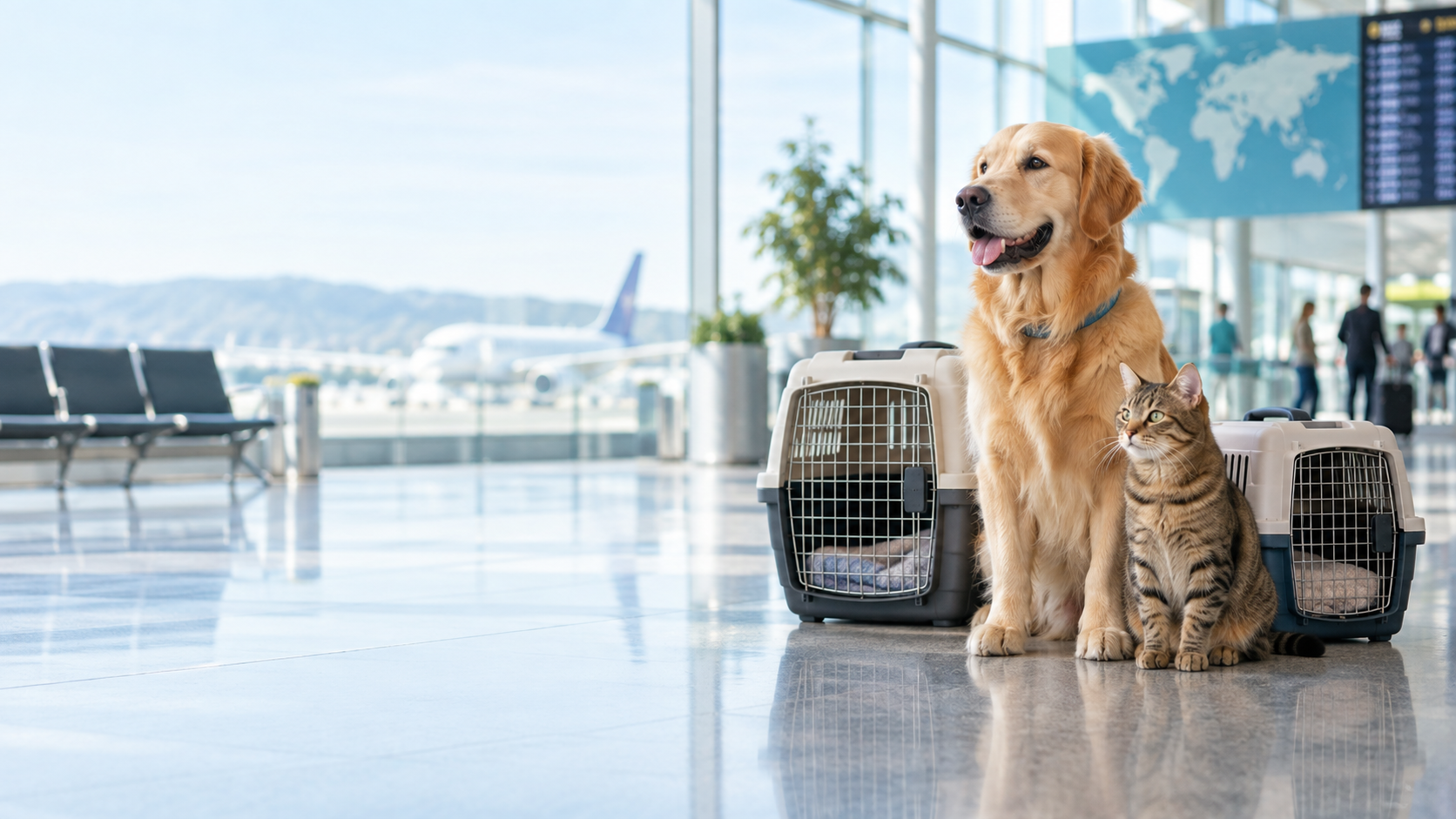
The travel crate is the pet’s protective enclosure for check-in, ground handling, flight, connections, and arrival. A crate that looks sturdy or carries an “airline approved” retail label can still be refused if it is too small, uses unacceptable hardware, lacks ventilation, does not fit the aircraft, or conflicts with a destination rule.
What IATA-compliant really means
The International Air Transport Association publishes Live Animals Regulations used throughout commercial air transport. The rules include species-specific container requirements, handling standards, documentation, labeling, and operator variations. For dogs and cats, IATA’s Container Requirement 1 is the main starting point.
IATA does not make every airline accept every store-bought crate. Airlines can impose stricter construction, fastening, breed, size, route, weather, or booking rules. Government authorities may add sealing, labeling, inspection, or material requirements.
Use the current IATA guidance as a baseline, then obtain confirmation from the operating airline for the exact animal and itinerary.
How to measure a dog or cat for an airline crate
Measure while the pet stands naturally on a level surface. Use a rigid ruler, carpenter’s square, or measuring stick when possible; soft tape can follow the body’s curves and understate a straight-line dimension. Record measurements more than once.
A — Body length
Tip of the nose to the base or root of the tail. Do not measure to the end of the tail.
B — Leg height
Floor to the elbow joint. This measurement contributes to the required crate length.
C — Body width
Across the shoulders or the widest natural point, whichever is greater.
D — Standing height
Floor to the top of the head or highest ear tip in a natural posture, whichever is higher.
Long hair does not change the skeleton, but upright ears, the animal’s natural posture, and the thickness of permitted bedding affect usable space. Measure the largest animal when an authorized exception permits more than one animal in a container.
IATA crate-size formula for one dog or cat
IATA’s public guidance provides these approximate minimum internal dimensions for a single animal:
| Internal dimension | Calculation | Important note |
|---|---|---|
| Length | A + ½ B | Nose-to-tail-base length plus half the leg height |
| Width | C × 2 | Twice the shoulder or widest-body measurement |
| Height | D + bedding | Highest natural standing point plus permitted bedding thickness |
The formula is a starting point, not an automatic acceptance. The pet must be able to stand and sit erect, lie naturally, and turn around normally while standing. Flat-faced breeds, unusually proportioned animals, long ears, and airline-specific rules may require more space.
Compare the required internal dimensions with the manufacturer’s internal measurements. Retail listings often emphasize external dimensions, which include walls, lips, handles, and hardware.
Perform a physical crate-fit test
- The pet can enter through the door without crouching or striking the frame
- The pet can stand naturally without the head or ears touching the roof
- The pet can sit erect in a normal position
- The pet can turn around without being compressed by the sides
- The pet can lie in a natural position with the forelegs extended as normally required
- Permitted bedding and attached bowls do not remove necessary body space
Photograph the pet standing, sitting, turning, and lying in the assembled crate. Some cargo departments or relocation providers request these images before confirming a shipment.
Crate construction and material checklist
A typical airline cargo crate for a dog or cat is rigid, escape-resistant, ventilated, clean, and strong enough for normal transport handling. Requirements vary, so treat this as an inspection framework rather than a substitute for the airline’s instructions.
Rigid shell
Fiberglass, metal, rigid plastic, solid wood, or plywood may be permitted under applicable rules; soft or collapsible carriers are not cargo crates.
Secure door
A strong metal door and locking system must prevent escape while allowing handlers to open it in an emergency.
Protected ventilation
Openings must supply airflow without allowing the pet’s nose, paws, or other body parts to protrude.
Leak-resistant floor
The base must contain waste and remain structurally sound with the approved absorbent material.
Safe interior
No sharp edges, loose fasteners, toxic coatings, exposed wire ends, or projections that can injure or snag the animal.
Handling space
External handles or spacer bars should allow lifting and airflow while keeping handlers away from the animal.
Doors, fasteners, metal hardware, and wheels
Inspect how the top, bottom, door, and ventilation panels remain attached under vibration and handling. Many airlines require rigid-plastic crate halves to be joined with metal nuts and bolts and reject plastic clips, twist latches, or improvised ties as the primary fasteners.
- Use the airline’s required bolt material, quantity, spacing, and orientation
- Confirm that every locking pin fully engages and cannot shake loose
- Make sure the door cannot be pushed outward or opened by the pet
- Never block ventilation with cable ties, tape, straps, document pouches, or labels
- Remove wheels or render them inoperable exactly as the airline directs
- Do not drill or modify the shell until the carrier confirms the alteration is permitted
Some strong, aggressive, very large, or short-nosed dogs may need a reinforced or custom wooden or metal container. Ask the airline for its current breed-specific construction standard before commissioning one.
Ventilation requirements
Ventilation must be adequate for the animal, crate design, journey, and carrier rule. USDA’s public air-travel guidance describes openings on three sides and the door for covered dog and cat transport, while international routes and airlines may impose four-sided or other requirements.
Do not count an opening that is obstructed by a wall, bowl, luggage, label, pad, or the animal’s body. Spacer bars can help prevent adjacent cargo from blocking airflow. Openings must still prevent escape and unsafe contact.
Food, water bowls, and absorbent material
Food and water containers are normally attached inside the door so handlers can reach and refill them without opening the crate. The attachment must be secure, smooth, and positioned so the pet can drink without losing required movement space.
Water system
Use the airline-approved bowl arrangement; test it at home for access, leakage, attachment strength, and freezing or refill instructions.
Food supply
Attach any required food and feeding instructions externally as directed. Do not leave loose containers inside.
Floor lining
Use only permitted absorbent material. Avoid prohibited straw, hay, deep bedding, loose litter, or materials that create ingestion or biosecurity concerns.
Last feeding record
Provide the required time and date food and water were offered and instructions for the next 24 hours.
Crate labels and document pouch
The airline supplies or specifies required markings. Position them where they remain visible without covering ventilation.
- Required Live Animals labels on the specified surfaces
- This Way Up or upright-orientation arrows on the required sides
- Owner, shipper, consignee, and emergency contact information
- Pet identification and relevant handling warnings permitted by the carrier
- Complete route and destination information
- Feeding and watering certification and instructions
- Accessible weather-resistant pouch for health and shipping documents
Do not write medical claims, sedation instructions, or “do not feed/water” directions unless the veterinarian and airline explicitly authorize them.
Crate size must match the aircraft and route
A crate can fit the pet correctly but still be incompatible with the scheduled aircraft’s cargo-door dimensions, compartment position, or loading equipment. This is particularly important for giant breeds and custom crates.
Ask the cargo department to verify every flight segment by aircraft type and crate external dimensions. Codeshare and connection flights may use another operator’s rules. An equipment change can invalidate a previously workable plan, so reconfirm close to departure and understand the rebooking process.
What to verify before buying a travel crate
- 1Confirm whether the pet will travel in cabin, as checked baggage where offered, or as manifest cargo.
- 2Get the operating airline’s current written crate, breed, route, and aircraft rules.
- 3Measure the pet and calculate the minimum internal dimensions.
- 4Compare both internal and external dimensions with the product specifications.
- 5Verify materials, door design, ventilation, fasteners, handles, bowls, flooring, and wheel treatment.
- 6Ask the airline or relocation provider to review the exact model and photos when possible.
- 7Buy early, assemble it, perform the physical fit test, and begin positive crate acclimation.
Do not choose from pet weight alone. Two animals of the same weight can require very different crate dimensions because of leg length, body length, shoulder width, head shape, and ears.
Final crate inspection before travel
- No cracks, damaged corners, warped panels, missing bolts, sharp edges, or weak attachment points
- Door and every fastener operate correctly and remain secure under firm pressure
- Ventilation is open and the pet cannot protrude through any gap
- Bowls are attached, reachable, refillable, and tested
- Permitted absorbent material is clean and does not reduce required height
- Labels and document pouch are complete, secure, visible, and weather protected
- Wheels are removed or disabled as instructed
- The pet still passes the standing, sitting, turning, and lying fit test
The airline performs the final acceptance inspection and can refuse a crate even after a reservation is confirmed. Arrive at the required facility early enough to address a correctable issue without rushing the animal.
Crate acclimation is part of compliance and safety
A technically compliant crate should also be familiar to the pet. Begin weeks in advance: reward voluntary entry, feed meals near or inside, build relaxed closed-door time gradually, and practice short periods with normal household and vehicle sounds. Never introduce the crate as punishment.
Watch for panic, persistent escape attempts, heavy drooling, self-injury, or inability to settle. Discuss significant distress with a veterinarian or qualified behavior professional early enough to reconsider the travel plan. Do not independently sedate the pet.
IATA travel crate FAQs
What does IATA-approved pet crate mean?
IATA publishes live-animal container requirements, but a retail phrase such as “IATA approved” is not a universal guarantee of acceptance. The airline decides whether the animal, crate, aircraft, route, and preparation comply for the booked shipment.
How do I know what size crate my dog needs?
Measure the dog standing naturally and calculate minimum internal dimensions using the airline’s current method. Then verify that the dog can stand and sit erect without touching the roof, turn around normally, and lie in a natural position.
Can a pet crate be too large?
Yes. A much larger crate can increase dimensional weight, handling difficulty, and aircraft compatibility problems. The goal is enough room for normal posture and movement—not unnecessary empty space.
Are plastic clips allowed on an airline crate?
Do not assume they are. Many carriers require the upper and lower rigid sections to be secured with metal nuts and bolts. Obtain the operating airline’s written fastening rules before travel.
Can the crate have wheels?
Airlines commonly require wheels to be removed or rendered inoperable. Confirm the carrier’s rule and make sure any wheel openings do not weaken the floor or create unsafe projections.
Can I put a bed, toy, leash, or collar inside?
Only use items expressly permitted by the operating airline. Loose objects, thick bedding, toys, leashes, or equipment can create entanglement, choking, ingestion, or acceptance risks.
How many pets can share one crate?
One animal per crate is the normal assumption. Narrow exceptions can exist for eligible young puppies or kittens, but age, weight, relationship, size, destination, and airline restrictions must all be checked.
When should I buy the crate?
Buy it early enough to verify fit, make allowed modifications, resolve aircraft-size limits, and complete gradual crate acclimation. Travel week is too late to discover a sizing or construction problem.